Category: Environment

  • Regenerative Connections: Eco Caminhos’ Visit to the Araçá Project — Conservation, Permaculture, and Reforestation in Brazil

    Regenerative Connections: Eco Caminhos’ Visit to the Araçá Project — Conservation, Permaculture, and Reforestation in Brazil

    On the morning of June 19, 2025, a diverse and enthusiastic group departed from Eco Caminhos, a sustainability farm known for its permaculture, agroforestry, and natural building practices, heading to RPPN Alto da Figueira, in Nova Friburgo (RJ). Excitement was high: farm workers, international volunteers, members of the Ecolibrium Association, and 12 students from Saint Mary’s University and Texas A&M were on their way to experience the conservation work of the Araçá Project—an initiative focused on scientific research and Atlantic Forest reforestation in Brazil.

    Understanding the Araçá Project and Its Role in Atlantic Forest Reforestation

    The Araçá Project is a visionary initiative by Alexandre and Anna Antonelli, co-founders of the Antonelli Foundations for Biodiversity Research and Conservation. Based in the RPPN Alto da Figueira, a 120-hectare Private Natural Heritage Reserve, the project is located in one of Brazil’s most biodiverse regions.

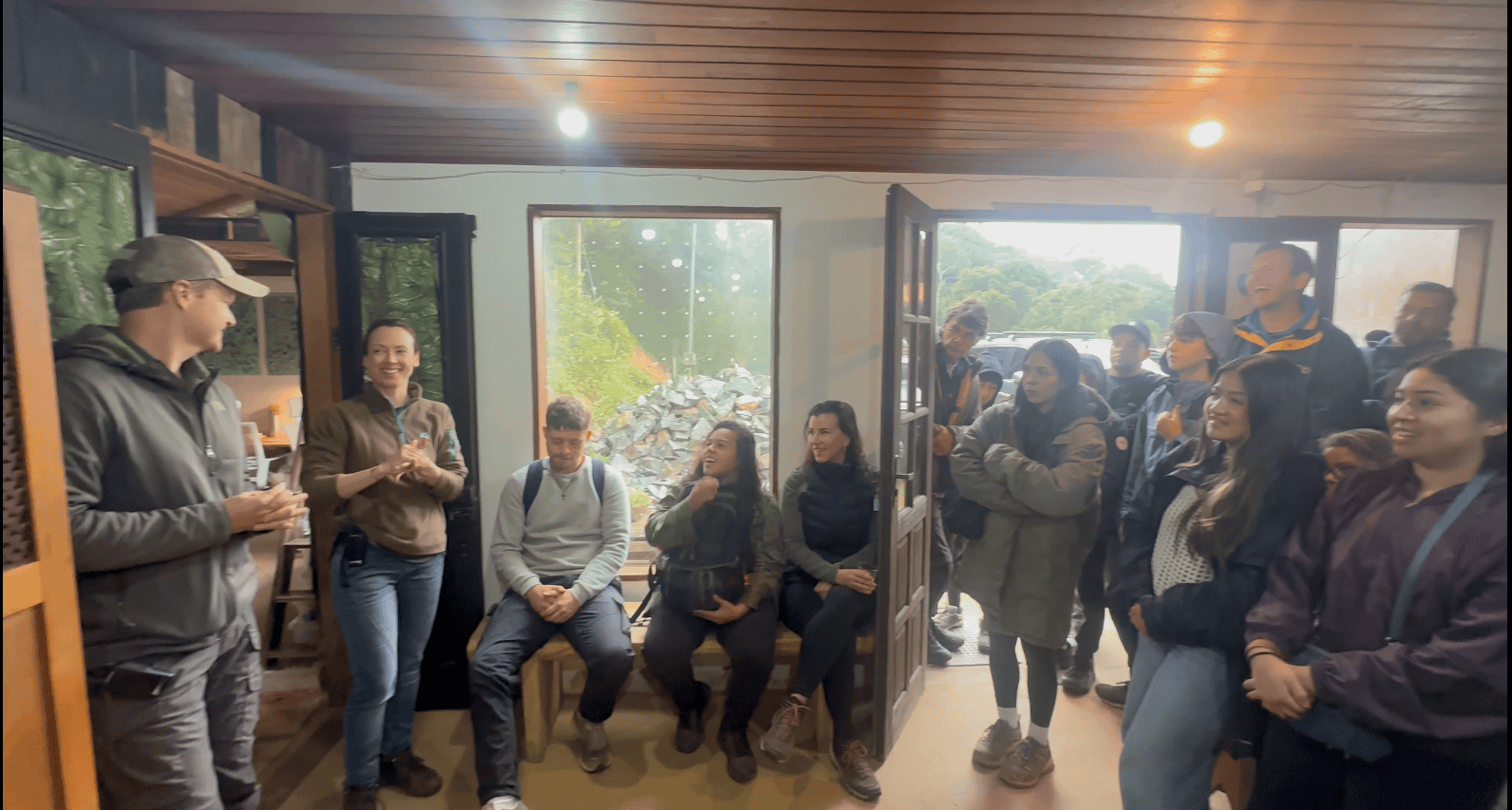
    foto recepção

    Thomas Berg and Karine Bresolin introduced the project’s mission, emphasizing a broader objective: building a network of science, education, reforestation, and community engagement to regenerate the Atlantic Forest and balance the relationship between humans and nature. Plans include expanding protected areas and supporting local communities through sustainable land use.

    Trail, Science, and Wonder in Brazil’s Atlantic Forest

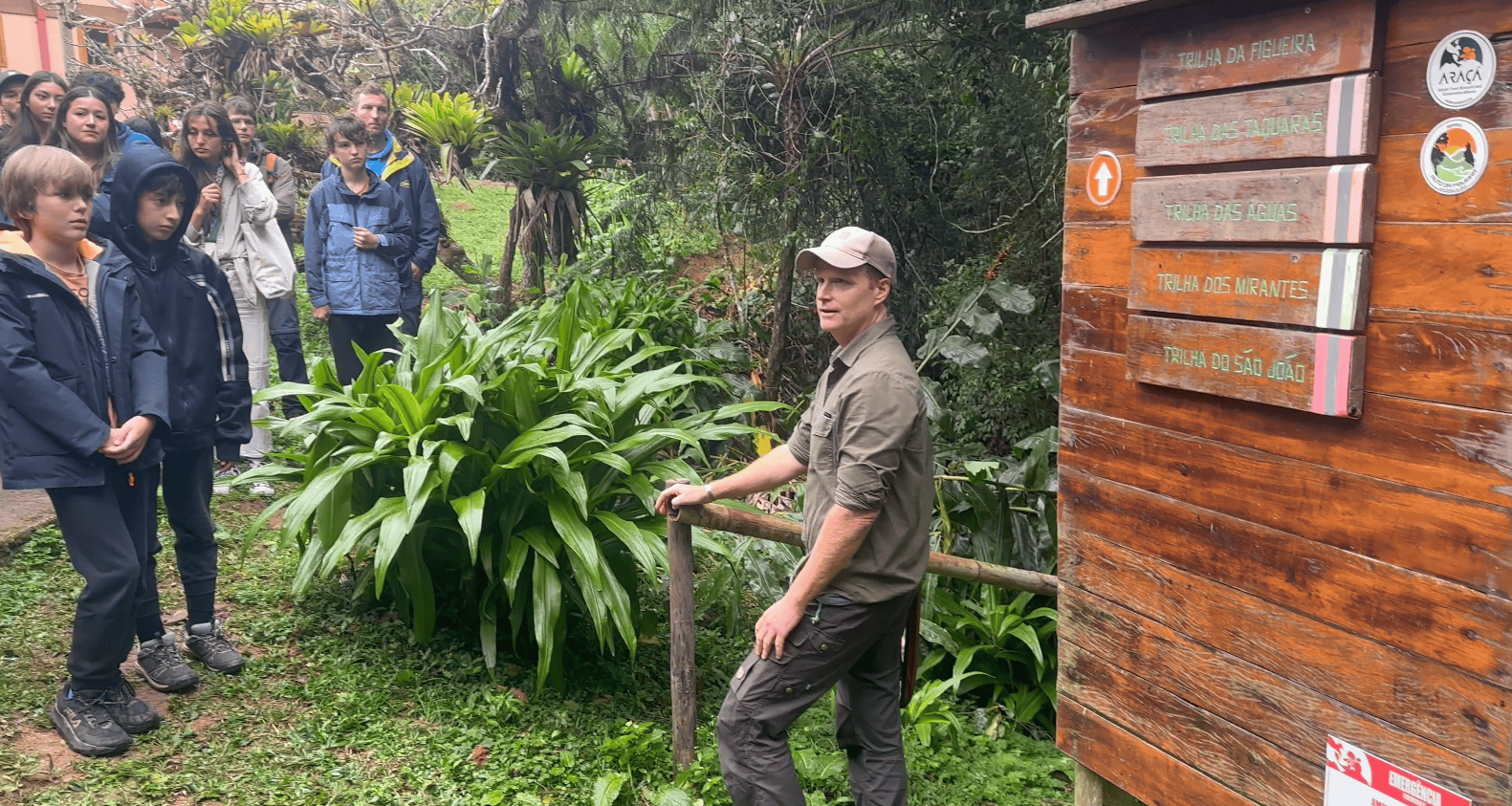
    comeco trilha

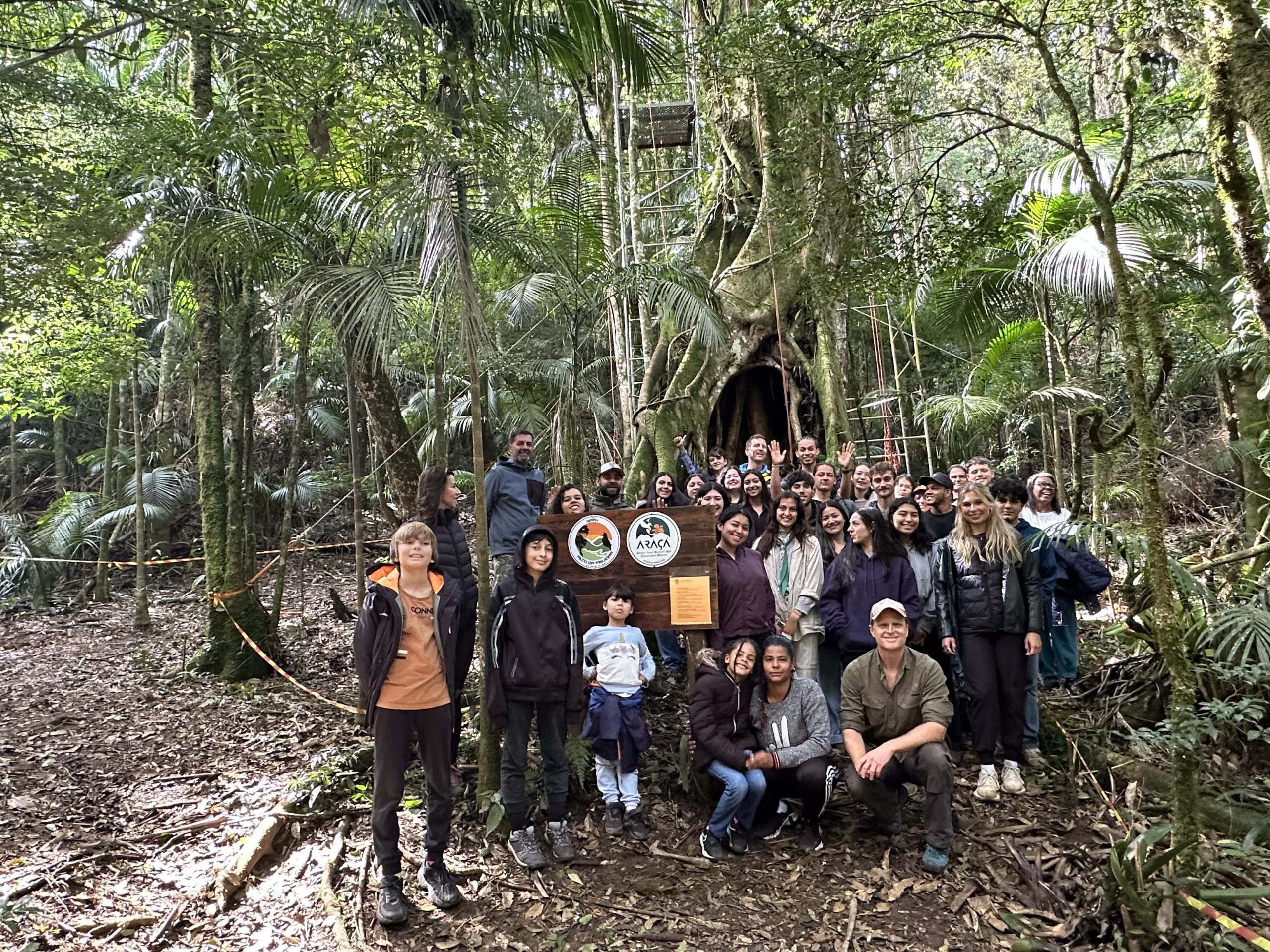
    The walk through the forest trail was transformative. Surrounded by lush vegetation and birdsong, we arrived at a majestic centuries-old fig tree, a key site for ecological studies.

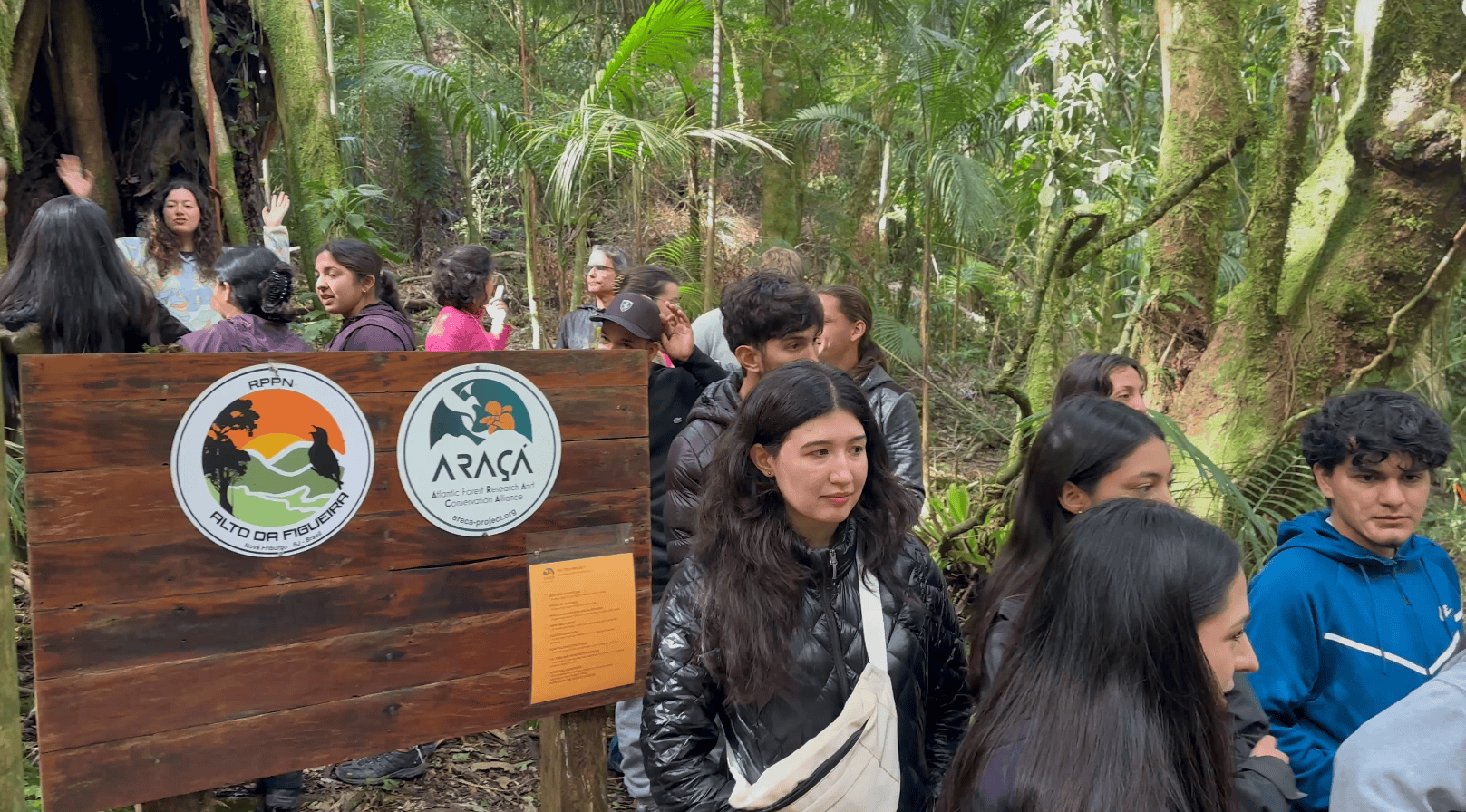
    “Even from the ground, you can tell how many species it hosts,” said Thomas. The tree stood as a symbol of interconnected biodiversity, with epiphytes, insects, lichens, and birds coexisting in harmony.

    foreigner students

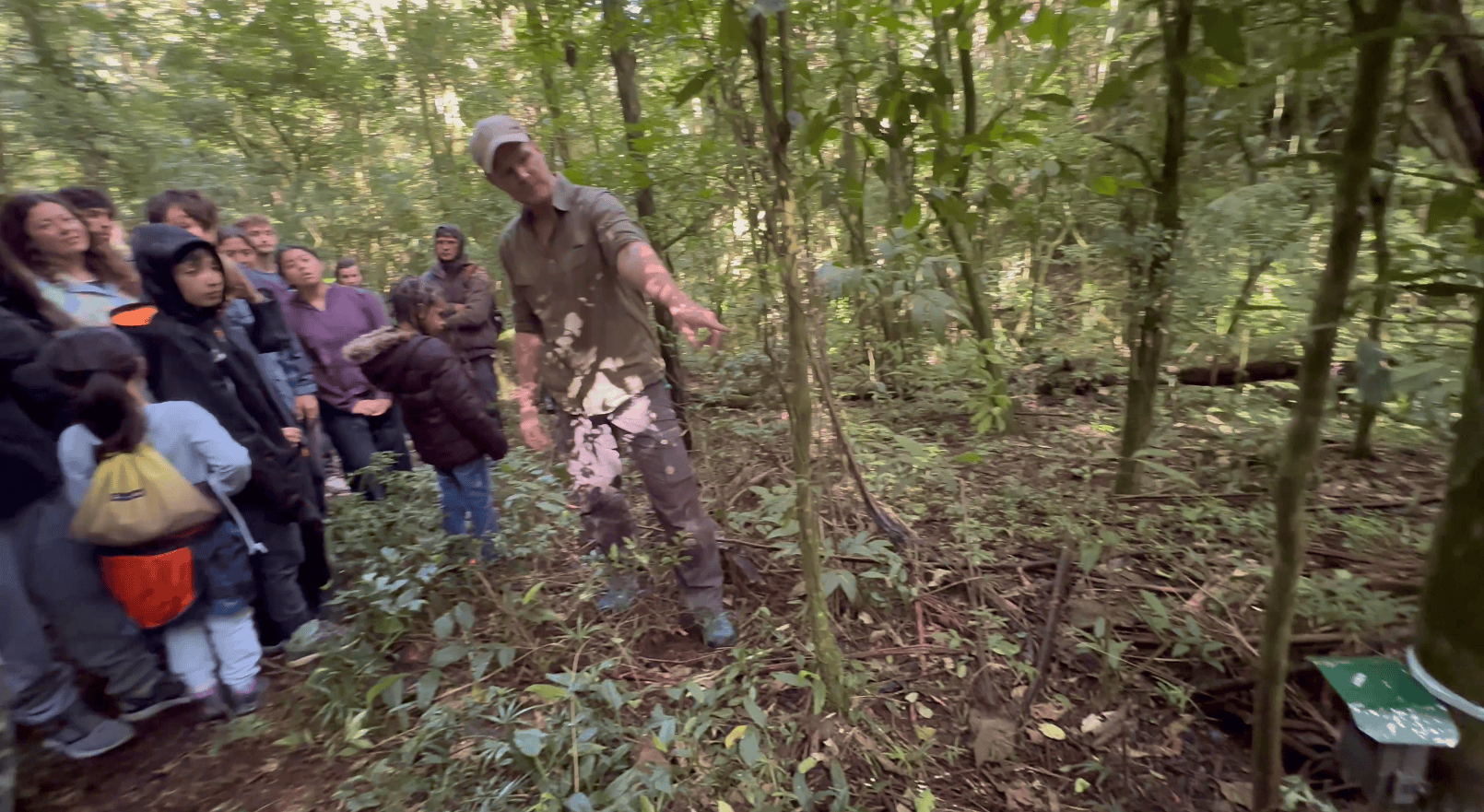
    Next, we visited a camera trap used to monitor wildlife. Thomas shared stories of local fauna and the importance of such tools in biodiversity research. He also addressed the negative impacts of domestic animals on conservation areas, highlighting real challenges faced with neighboring lands.

    camera trap

    Later, we saw a forest area where LIDAR technology had been used for 3D mapping. This site enables long-term studies of natural regeneration, offering a vivid view of how the forest heals itself.

    Science and Sustainability in Progress: A Hub for Permaculture and Conservation Research

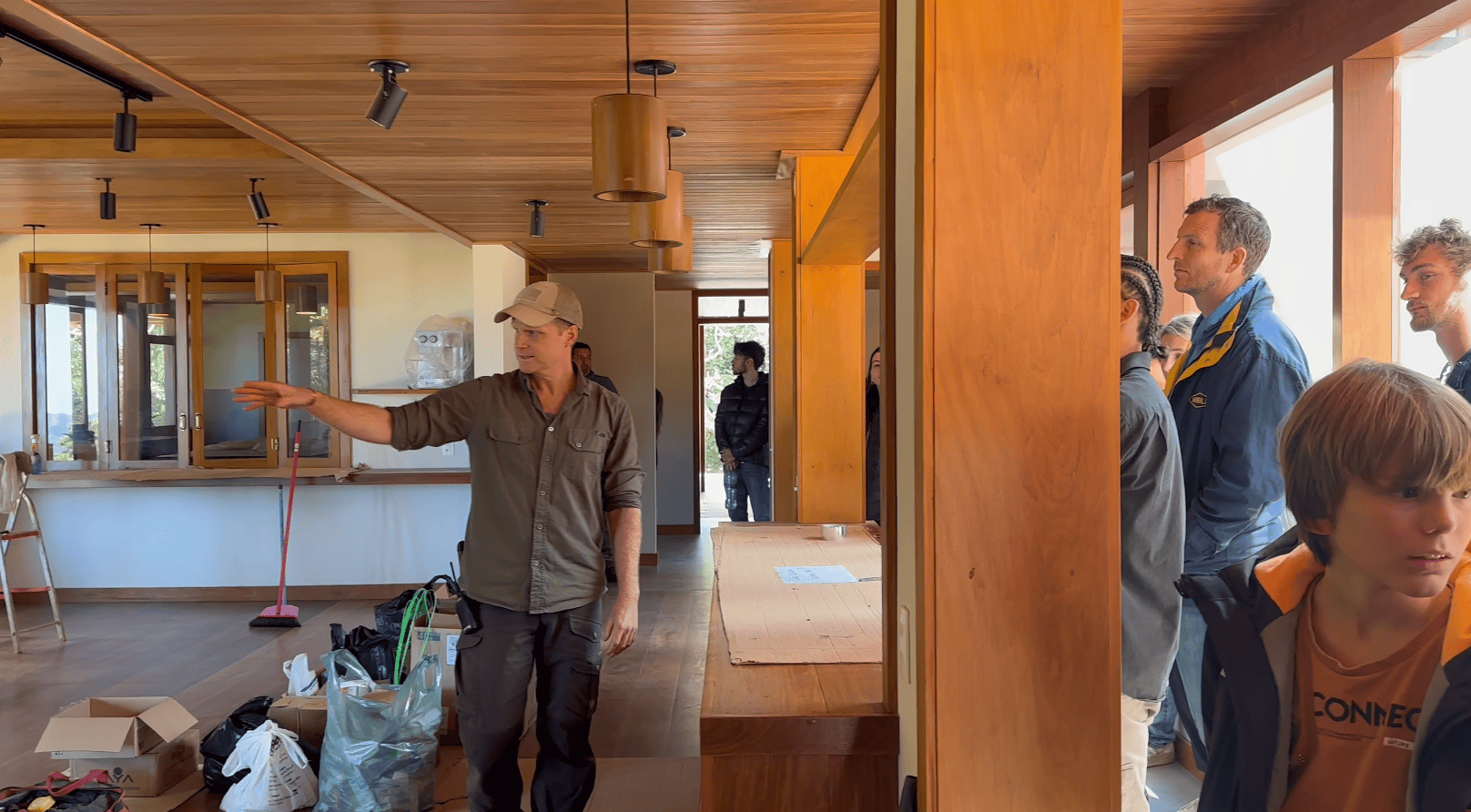
    Our final stop was the future Araçá Research Center, a modern facility under construction. Once completed, it will host global scientists studying biodiversity, conservation, permaculture, and climate change, especially in the Atlantic Forest context.

    More than a laboratory, this center will be a convergence point for diverse perspectives—scientific and traditional—committed to ecological restoration.

    centro pesquisa

    A Threatened But Living Heritage — and an Opportunity for Volunteers in South America

    The Atlantic Forest is one of the world’s richest biomes in biodiversity. Yet, more than 92% of its original area has been lost over two centuries due to agriculture, urbanization, and logging. Despite this, what remains is home to many endemic and endangered species.

    Projects like Araçá provide hope. Protecting and restoring the forest benefits climate stability, biodiversity, and local communities. It’s also a compelling opportunity for those seeking meaningful volunteering experiences in South America.

    A Day That Inspires Permaculture Practitioners and Eco Volunteers

    For us at Eco Caminhos, the visit was more than an educational outing. It was a call to action. We returned inspired and more aware of our role in collective conservation.

    Our daily work at Eco Caminhos integrates agroforestry, permaculture, bioconstruction, and volunteer engagement in Brazil. Visiting a like-minded project grounded in scientific integrity reaffirmed our mission.

    Want to learn more about agroforestry? Visit our page on the website: https://zieplay.com/agroforestry-syntropic-agriculture/

    IMG

    United Paths for Reforestation and Agroforestry

    We sincerely thank Thomas Berg, Karine Bresolin, the Araçá Project team, and the Antonelli Foundations. Special thanks to the students from the USA—your presence enriched this journey.

    We at Eco Caminhos are committed to contributing however possible so that together we can protect, restore, and celebrate the Atlantic Forest.

    Be a part of it too! Come and become a volunteer at Eco Caminhos.
    https://zieplay.com/volunteer-in-brazil/

    Learn more about the Araçá Project at https://www.projeto-araca.org/


  • Coffee Cultivation for Forest Restoration

    Coffee Cultivation for Forest Restoration

    [vc_row][vc_column][/vc_column][/vc_row][vc_row][vc_column][swmsc_simple_section id=”” class=”” style=””][swmsc_text_block id=”” class=”” style=””]

    At Eco Caminhos, our coffee will offer more than a morning pick me up; but serve as a testament to agroforestry, an agricultural technique which combines reforestation with crop production. Guided by the principles of syntropic agriculture developed by Ernst Götsch, we are cultivating shade-grown specialty coffee that thrives in harmony with the surrounding ecosystem. Nestled in Brazil’s Mata Atlântica mountains, we aim to support local family farmers and exemplify how sustainable agriculture can drive economic growth while preserving nature.

    Specialty Coffee: Why the Demand—and Price—Are on the Rise

    Specialty coffee, known for its superior quality and unique flavor profiles, has gained global popularity in recent years. Market trends indicate that the price of specialty coffee is likely to increase, driven by both growing demand and the impacts of climate change on conventional methods of coffee production. Factors like limited availability of suitable growing conditions and rising production costs are putting pressure on prices. At Eco Caminhos, our agroforestry system mitigates these challenges by providing a resilient environment where our coffee can flourish under the canopy of native trees.¹ 

    [/swmsc_text_block][vc_column_text css=””][/vc_column_text][gap size=”30px” id=”” class=”” style=””][/swmsc_simple_section][/vc_column][/vc_row][vc_row css=”.vc_custom_1731520402371{margin-right: 20px !important;margin-left: 20px !important;}”][vc_column width=”1/2″][swmsc_simple_section id=”” class=”” style=””][swmsc_text_block id=”” class=”” style=””]

    The Advantages of Our Agroforestry System for Coffee Cultivation

    Our approach to coffee cultivation is designed to restore the local ecosystem while minimizing resource use. We use 250 species of native trees from the Mata Atlântica, which play a vital role in restoring the region’s flora and fauna. Fertilization is required only once, and irrigation is needed only for the first three years after planting. Beyond that, irrigation stops as the deep-rooted trees naturally enhance water retention, creating a self-sustaining system. Fertilization is maintained through pruning, enriching the soil with organic matter. This method eliminates the need for agrotoxins and avoids annual plowing, as the permanent agroforestry system preserves soil structure and biodiversity. While the initial investment is higher, this approach becomes more workable and cost-effective over time, making it ideal for regions facing water scarcity and soil degradation. Additionally, it contributes to the regeneration of native ecosystems, promoting biodiversity and improving resilience to climate variability.[/swmsc_text_block][/swmsc_simple_section][/vc_column][vc_column width=”1/2″][vc_single_image image=”25318″ img_size=”large” css=””][/vc_column][/vc_row][vc_row][vc_column][gap size=”30px” id=”” class=”” style=””][swmsc_simple_section id=”” class=”” style=””][swmsc_text_block id=”” class=”” style=””]

    Supporting Local Farmers Through Sustainable Agroforestry

    With future plans to expand our model, we aim to support local family farmers in adopting the model of agroforestry that we developed. These small farms are essential to Brazil’s agricultural landscape, and by integrating them into our model, we can help them transition to sustainable practices that counteract the heavy pollution affecting the region. 

    Not only does this movement have potential to transform agriculture in the region, but also plays a role in reforestation of the Atlantic Forest, where we are located, which suffered extensive environmental degradation from industrial agriculture and pollution.Our agroforestry practices serve as a buffer zone between natural reserves and agricultural landscapes. By increasing agroforestry systems, we create a protective layer that distances harmful agricultural practices from the natural reserves of the Mata Atlântica, helping to preserve biodiversity and prevent ecosystem degradation.

    In addition to environmental benefits, our program fosters a profound transformation for farmers who adopt agroforestry practices. These farmers reconnect with their land and nature, gaining independence from major fertilizer and agrochemical suppliers. By producing their own coffee brands and selling directly to end consumers, they reclaim power as producers and escape the constraints of traditional supply chains. This empowerment not only fosters economic resilience but also strengthens the bond between farmers, their land, and their communities.

    [/swmsc_text_block][gap size=”30px” id=”” class=”” style=””][/swmsc_simple_section][/vc_column][/vc_row][vc_row css=”.vc_custom_1731520563742{margin-right: 20px !important;margin-left: 20px !important;}”][vc_column width=”1/2″][swmsc_simple_section id=”” class=”” style=””][swmsc_text_block id=”” class=”” style=””]

    Specialty Coffee in Agroforestry: A Resilient, High-Quality Product

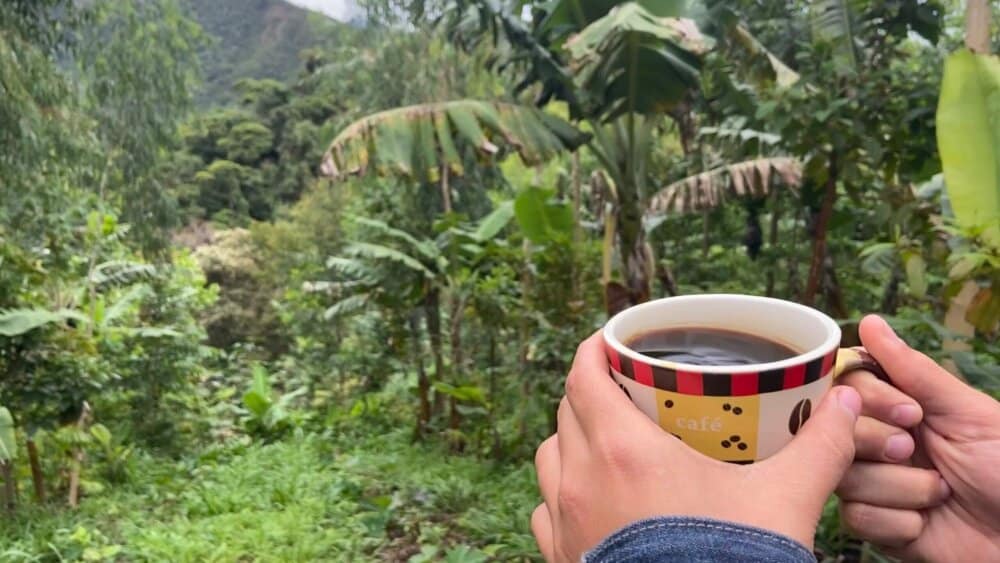
    Shade-grown specialty coffee is known for its distinct taste, which develops under the protective canopy of trees. Our coffee plants benefit from this natural shade, which reduces temperature fluctuations and prolongs the maturation process, enhancing the beans’ complex flavors. Furthermore, our agroforestry system reduces the need for chemical inputs, as the diverse vegetation naturally manages pests and diseases, contributing to a cleaner, more sustainable coffee product.[/swmsc_text_block][/swmsc_simple_section][/vc_column][vc_column width=”1/2″][gap size=”30px” id=”” class=”” style=””][vc_single_image image=”23783″ img_size=”large” css=””][/vc_column][/vc_row][vc_row css=”.vc_custom_1731520578623{margin-right: 20px !important;margin-left: 20px !important;}”][vc_column width=”1/2″][gap size=”30px” id=”” class=”” style=””][gap size=”30px” id=”” class=”” style=””][gap size=”30px” id=”” class=”” style=””][swmsc_simple_section id=”” class=”” style=””][vc_single_image image=”23115″ img_size=”large” css=””][/swmsc_simple_section][/vc_column][vc_column width=”1/2″][gap size=”30px” id=”” class=”” style=””][swmsc_text_block id=”” class=”” style=””]

    Learning and Community Engagement Over a Cup of Coffee

    The Ecolibrium Space, our educational center which is currently under construction, will feature a farm to table restaurant where you can order up a cup of our brew, but that’s not all; at the Ecolibrium Space we will be offering workshops and hands-on experiences in agroforestry, permaculture, and natural building. We aim to share knowledge with a diverse audience and empower them to implement sustainable practices in their own communities. Our programs are designed to foster a deep connection with nature while promoting regional sustainability, giving participants the skills to create positive environmental impacts wherever they go.

    [/swmsc_text_block][/vc_column][/vc_row][vc_row][vc_column][gap size=”30px” id=”” class=”” style=””][swmsc_simple_section id=”” class=”” style=””][swmsc_text_block id=”” class=”” style=””]

    The Future of Specialty Coffee and Agroforestry at Eco Caminhos

    With increasing demand and prices for specialty coffee on the horizon, our agroforestry system offers a sustainable and economically viable solution. By providing support to local farmers in adopting our business model, we are not only enhancing their economic resilience but also contributing to the restoration of the Atlantic Forest. As we continue to expand, we invite you to join us on this journey. Whether you’re here for a cup of coffee, interested in our volunteer program, or exploring our tourism offerings, you’ll find opportunities for both theoretical and hands-on learning experiences. Our programs include exciting outdoor activities that immerse you in the beautiful mountains. To learn more about how you can get involved or visit, please explore our website.

    Join us at Eco Caminhos and be part of a growing movement toward sustainable agriculture that supports local economies and preserves the environment.[/swmsc_text_block][/swmsc_simple_section][vc_single_image image=”26679″ img_size=”1000X500″ alignment=”center” css=””][/vc_column][/vc_row][vc_row][vc_column][swmsc_simple_section id=”” class=”” style=””][gap size=”30px” id=”” class=”” style=””][swmsc_text_block id=”” class=”” style=””]

    Sources

    Oxford Research Encyclopedia of Environmental Science. “Sustainable Coffee Production.” Link.[/swmsc_text_block][/swmsc_simple_section][/vc_column][/vc_row]

  • Exploring the Preservation and Regeneration of the Atlantic Forest While Empowering Communities

    Exploring the Preservation and Regeneration of the Atlantic Forest While Empowering Communities

    [vc_row][vc_column][swmsc_simple_section id=”” class=”” style=””][swmsc_text_block id=”” class=”” style=””]The Atlantic Forest is as beautiful as it is biodiverse, and for nature lovers it’s quite the setting for a weekend getaway, complete with hiking trails, waterfalls, and abundant wildlife. However after hundreds of years of deforestation less than 10% of the original forest remains. After a group of environmental professionals spent a weekend exploring the forest and environmental projects seeking to protect it, the consensus was unanimous, efforts to restore the Atlantic Forest to its former glory could make a remarkable difference for the environment and local economy.[/swmsc_text_block][/swmsc_simple_section][/vc_column][/vc_row][vc_row][vc_column][vc_single_image image=”26459″ img_size=”large” alignment=”center” css=”.vc_custom_1730132737441{margin-top: 35px !important;}”][gap size=”30px” id=”” class=”” style=””][/vc_column][/vc_row][vc_row][vc_column width=”1/2″][swmsc_simple_section id=”” class=”” style=””][swmsc_text_block id=”” class=”” style=””]Ilona Szabó de Carvalho, co-founder and executive director of Instituto Igarapé and a member of the United Nations Secretary-General’s High-Level Advisory Board on Effective Multilateralism, invited leaders from globally recognized institutions to explore environmental projects in the Atlantic Forest. Participants represented diverse institutions including Royal Botanic Gardens, Kew, University of Gothenburg, Terradot and host organizations Eco Caminhos, Associação Ecolibrium, and Projeto Araçá. The visit highlighted the extraordinary biodiversity of the Atlantic Forest, explored ongoing conservation projects, and demonstrated the immense potential to expand these sustainable practices across the region, serving as a model for broader environmental restoration initiatives.[/swmsc_text_block][/swmsc_simple_section][/vc_column][vc_column width=”1/2″][vc_single_image image=”26441″ img_size=”full” css=”.vc_custom_1730134836491{padding-right: 40px !important;}”][/vc_column][/vc_row][vc_row][vc_column][gap size=”30px” id=”” class=”” style=””][gap size=”30px” id=”” class=”” style=””][swmsc_text_block id=”” class=”” style=””]

    Day 1: Projeto Araçá – A Hub for Biodiversity Research and Restoration

    [/swmsc_text_block][/vc_column][/vc_row][vc_row][vc_column width=”1/2″][swmsc_simple_section id=”” class=”” style=””][vc_single_image image=”26449″ img_size=”full” alignment=”center” css=””][/swmsc_simple_section][/vc_column][vc_column width=”1/2″][swmsc_text_block id=”” class=”” style=””]The first day of the trip took participants to Projeto Araçá, where they explored the ongoing work at the Biodiversity Research Center in the Private Natural Heritage Reserve (RPPN) Alto da Figueira. This project focuses on restoring biodiversity in the Atlantic Forest by combining scientific research with hands-on conservation efforts. Alexandre Antonelli, founding director of Araça, explained that in the short period they have done research in Alto da Figueira they have identified 100 new types of insects not registered anywhere else.

    Participants discussed the critical need for ecological corridors and expanded buffer zones to help regenerate the forest and connect fragmented ecosystems. The discussions also touched on the potential of ecotourism as a tool for both conservation and sustainable development. Ecotourism offers a way to provide economic benefits to local communities while raising awareness and funding for environmental preservation efforts. By attracting visitors to experience the rich biodiversity of the Atlantic Forest, ecotourism can support ongoing conservation efforts and create jobs in rural areas.[/swmsc_text_block][/vc_column][/vc_row][vc_row][vc_column][gap size=”30px” id=”” class=”” style=””][gap size=”30px” id=”” class=”” style=””][swmsc_text_block id=”” class=”” style=””]

    Day 2: Eco Caminhos – Agroforestry and Sustainable Agriculture

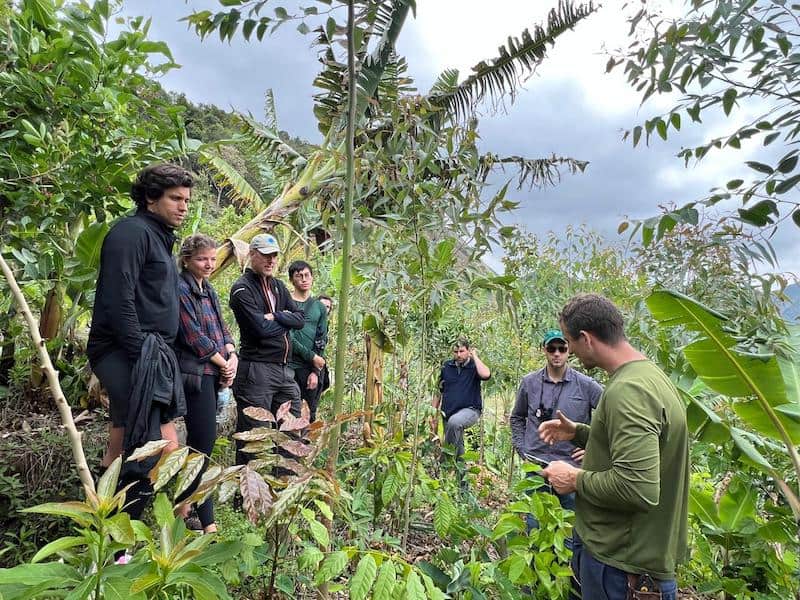
    [/swmsc_text_block][/vc_column][/vc_row][vc_row][vc_column width=”1/2″][swmsc_text_block id=”” class=”” style=””]On the second day, participants visited Eco Caminhos, where they learned about the farm’s successful integration of agroforestry and permaculture to restore degraded land and produce high-quality specialty coffee. This project serves as an example of how sustainable agricultural practices can support both environmental restoration and local economies.

    In collaboration with Associação Ecolibrium, Eco Caminhos is constructing a 1200 m² naturally built training center to teach local farmers sustainable agroforestry practices. The goal is to support 10 farms over the coming 10 years, restoring 300 hectares of native forest. With success, this project could be replicated in other regions of Brazil and around the world, amplifying its positive impact on biodiversity and sustainable land use.[/swmsc_text_block][/vc_column][vc_column width=”1/2″][vc_single_image image=”26467″ img_size=”full” alignment=”center” css=””][/vc_column][/vc_row][vc_row][vc_column][gap size=”30px” id=”” class=”” style=””][gap size=”30px” id=”” class=”” style=””][swmsc_text_block id=”” class=”” style=””]

    Future Discussions: Scaling Sustainable Solutions

    This field trip emphasized the potential of nature restoration to address multiple global challenges, from improving local livelihoods to enhancing biodiversity, combating climate change, and promoting ecotourism. Participants discussed the importance of scaling successful models like those seen at Projeto Araçá and Eco Caminhos to other regions, with a goal of restoring more ecosystems and boosting local economies through sustainable tourism initiatives.

    The next step involves further discussions among the participants to develop projects aimed at addressing these environmental challenges and expanding the reach of these sustainable solutions globally.[/swmsc_text_block][vc_single_image image=”26461″ img_size=”large” alignment=”center” css=”.vc_custom_1730132875135{margin-top: 35px !important;}”][/vc_column][/vc_row][vc_row][vc_column][gap size=”30px” id=”” class=”” style=””][gap size=”30px” id=”” class=”” style=””][swmsc_text_block id=”” class=”” style=””]

    Acknowledgements

    The field trip was organized in collaboration with Instituto Igarapé, Projeto Araçá, Eco Caminhos, Associação Ecolibrium, Royal Botanic Gardens, Kew, University of Gothenburg, and Terradot. The participants stayed at Vale das Seriemas, where they enjoyed its incredible views, comfortable accommodation, and delicious food at their restaurant.

    Participants included Ilona Szabó de Carvalho, Johannes van de Ven, Karine Bresolin, Bart Bijen, Fausto Amadigi, Julia Marisa Sekula, Carolina Graça, Carlota Szabó de Carvalho, Alexandre Antonelli, Thomas Berg, PhD, and Hannes Dempewolf.[/swmsc_text_block][/vc_column][/vc_row]