Category: Agroforestry

  • Exploring the Preservation and Regeneration of the Atlantic Forest While Empowering Communities

    Exploring the Preservation and Regeneration of the Atlantic Forest While Empowering Communities

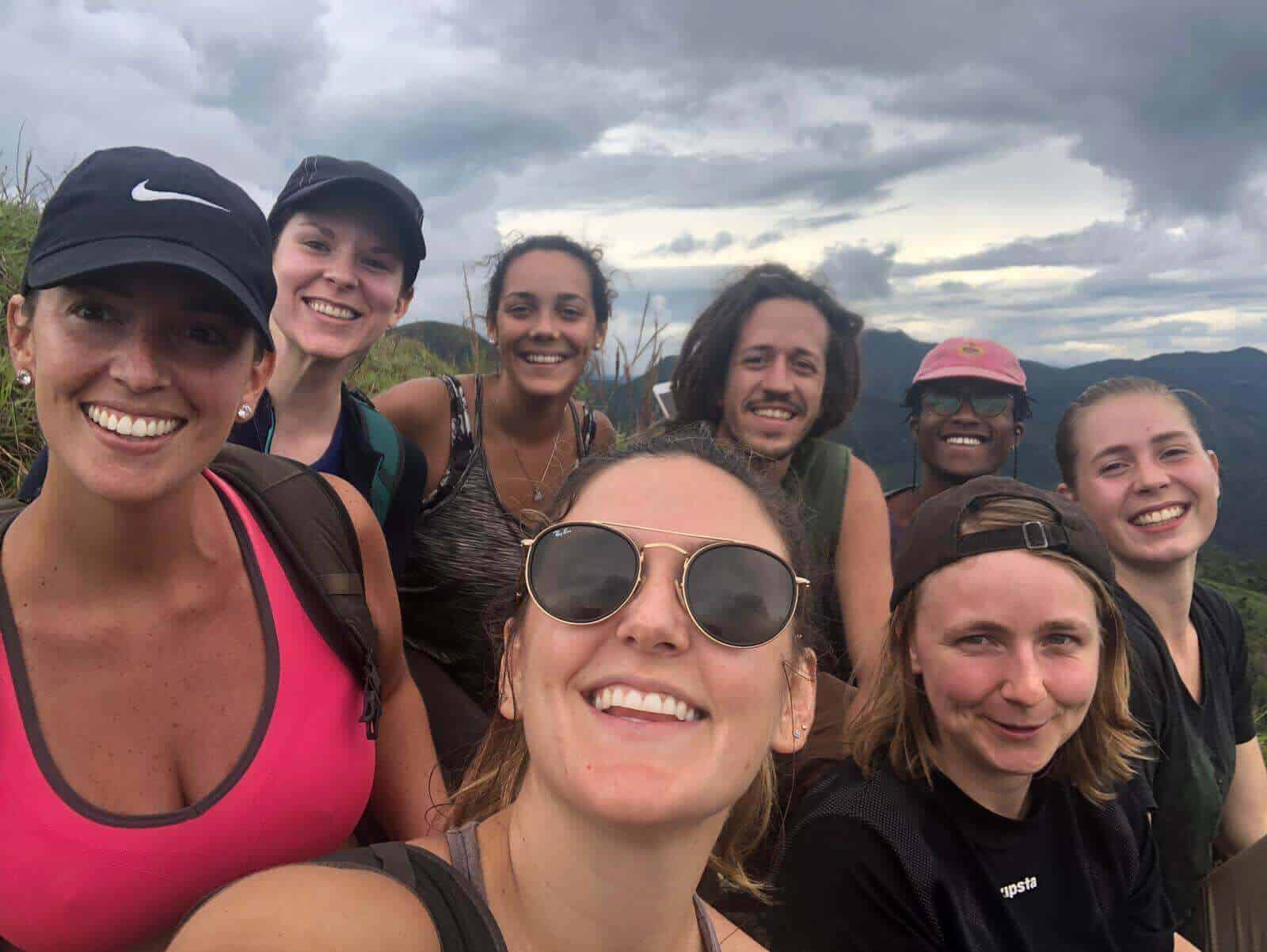
    [vc_row][vc_column][swmsc_simple_section id=”” class=”” style=””][swmsc_text_block id=”” class=”” style=””]The Atlantic Forest is as beautiful as it is biodiverse, and for nature lovers it’s quite the setting for a weekend getaway, complete with hiking trails, waterfalls, and abundant wildlife. However after hundreds of years of deforestation less than 10% of the original forest remains. After a group of environmental professionals spent a weekend exploring the forest and environmental projects seeking to protect it, the consensus was unanimous, efforts to restore the Atlantic Forest to its former glory could make a remarkable difference for the environment and local economy.[/swmsc_text_block][/swmsc_simple_section][/vc_column][/vc_row][vc_row][vc_column][vc_single_image image=”26459″ img_size=”large” alignment=”center” css=”.vc_custom_1730132737441{margin-top: 35px !important;}”][gap size=”30px” id=”” class=”” style=””][/vc_column][/vc_row][vc_row][vc_column width=”1/2″][swmsc_simple_section id=”” class=”” style=””][swmsc_text_block id=”” class=”” style=””]Ilona Szabó de Carvalho, co-founder and executive director of Instituto Igarapé and a member of the United Nations Secretary-General’s High-Level Advisory Board on Effective Multilateralism, invited leaders from globally recognized institutions to explore environmental projects in the Atlantic Forest. Participants represented diverse institutions including Royal Botanic Gardens, Kew, University of Gothenburg, Terradot and host organizations Eco Caminhos, Associação Ecolibrium, and Projeto Araçá. The visit highlighted the extraordinary biodiversity of the Atlantic Forest, explored ongoing conservation projects, and demonstrated the immense potential to expand these sustainable practices across the region, serving as a model for broader environmental restoration initiatives.[/swmsc_text_block][/swmsc_simple_section][/vc_column][vc_column width=”1/2″][vc_single_image image=”26441″ img_size=”full” css=”.vc_custom_1730134836491{padding-right: 40px !important;}”][/vc_column][/vc_row][vc_row][vc_column][gap size=”30px” id=”” class=”” style=””][gap size=”30px” id=”” class=”” style=””][swmsc_text_block id=”” class=”” style=””]

    Day 1: Projeto Araçá – A Hub for Biodiversity Research and Restoration

    [/swmsc_text_block][/vc_column][/vc_row][vc_row][vc_column width=”1/2″][swmsc_simple_section id=”” class=”” style=””][vc_single_image image=”26449″ img_size=”full” alignment=”center” css=””][/swmsc_simple_section][/vc_column][vc_column width=”1/2″][swmsc_text_block id=”” class=”” style=””]The first day of the trip took participants to Projeto Araçá, where they explored the ongoing work at the Biodiversity Research Center in the Private Natural Heritage Reserve (RPPN) Alto da Figueira. This project focuses on restoring biodiversity in the Atlantic Forest by combining scientific research with hands-on conservation efforts. Alexandre Antonelli, founding director of Araça, explained that in the short period they have done research in Alto da Figueira they have identified 100 new types of insects not registered anywhere else.

    Participants discussed the critical need for ecological corridors and expanded buffer zones to help regenerate the forest and connect fragmented ecosystems. The discussions also touched on the potential of ecotourism as a tool for both conservation and sustainable development. Ecotourism offers a way to provide economic benefits to local communities while raising awareness and funding for environmental preservation efforts. By attracting visitors to experience the rich biodiversity of the Atlantic Forest, ecotourism can support ongoing conservation efforts and create jobs in rural areas.[/swmsc_text_block][/vc_column][/vc_row][vc_row][vc_column][gap size=”30px” id=”” class=”” style=””][gap size=”30px” id=”” class=”” style=””][swmsc_text_block id=”” class=”” style=””]

    Day 2: Eco Caminhos – Agroforestry and Sustainable Agriculture

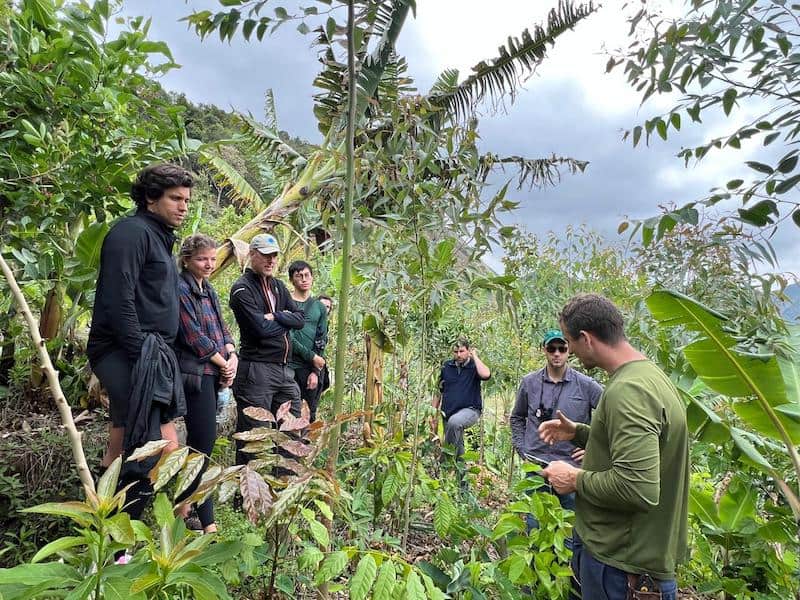
    [/swmsc_text_block][/vc_column][/vc_row][vc_row][vc_column width=”1/2″][swmsc_text_block id=”” class=”” style=””]On the second day, participants visited Eco Caminhos, where they learned about the farm’s successful integration of agroforestry and permaculture to restore degraded land and produce high-quality specialty coffee. This project serves as an example of how sustainable agricultural practices can support both environmental restoration and local economies.

    In collaboration with Associação Ecolibrium, Eco Caminhos is constructing a 1200 m² naturally built training center to teach local farmers sustainable agroforestry practices. The goal is to support 10 farms over the coming 10 years, restoring 300 hectares of native forest. With success, this project could be replicated in other regions of Brazil and around the world, amplifying its positive impact on biodiversity and sustainable land use.[/swmsc_text_block][/vc_column][vc_column width=”1/2″][vc_single_image image=”26467″ img_size=”full” alignment=”center” css=””][/vc_column][/vc_row][vc_row][vc_column][gap size=”30px” id=”” class=”” style=””][gap size=”30px” id=”” class=”” style=””][swmsc_text_block id=”” class=”” style=””]

    Future Discussions: Scaling Sustainable Solutions

    This field trip emphasized the potential of nature restoration to address multiple global challenges, from improving local livelihoods to enhancing biodiversity, combating climate change, and promoting ecotourism. Participants discussed the importance of scaling successful models like those seen at Projeto Araçá and Eco Caminhos to other regions, with a goal of restoring more ecosystems and boosting local economies through sustainable tourism initiatives.

    The next step involves further discussions among the participants to develop projects aimed at addressing these environmental challenges and expanding the reach of these sustainable solutions globally.[/swmsc_text_block][vc_single_image image=”26461″ img_size=”large” alignment=”center” css=”.vc_custom_1730132875135{margin-top: 35px !important;}”][/vc_column][/vc_row][vc_row][vc_column][gap size=”30px” id=”” class=”” style=””][gap size=”30px” id=”” class=”” style=””][swmsc_text_block id=”” class=”” style=””]

    Acknowledgements

    The field trip was organized in collaboration with Instituto Igarapé, Projeto Araçá, Eco Caminhos, Associação Ecolibrium, Royal Botanic Gardens, Kew, University of Gothenburg, and Terradot. The participants stayed at Vale das Seriemas, where they enjoyed its incredible views, comfortable accommodation, and delicious food at their restaurant.

    Participants included Ilona Szabó de Carvalho, Johannes van de Ven, Karine Bresolin, Bart Bijen, Fausto Amadigi, Julia Marisa Sekula, Carolina Graça, Carlota Szabó de Carvalho, Alexandre Antonelli, Thomas Berg, PhD, and Hannes Dempewolf.[/swmsc_text_block][/vc_column][/vc_row]
  • Digital Nomads Redefine Remote Work on Eco Farms

    Digital Nomads Redefine Remote Work on Eco Farms

    [vc_row][vc_column][vc_column_text]

    [/vc_column_text][/vc_column][/vc_row][vc_row][vc_column][gap size=”10px” id=”” class=”” style=””][swmsc_image_gallery border_radius=”5px” border_width=”0″ border_color=”#e6e6e6″ image_margin=”20px” image_size=”full” columns=”3″ grid_type=”masonry” lightbox=”false” image_text=”none” hover_icon_color=”#ffffff” hover_icon_bg_color=”#f8b54e” title_text_size=”20px” title_text_color=”#555555″ caption_text_size=”16px” caption_text_color=”#777777″ caption_border=”off” id=”” class=”” style=”” image_ids=”25747,25736,25743″][/vc_column][/vc_row][vc_row][vc_column][vc_column_text]

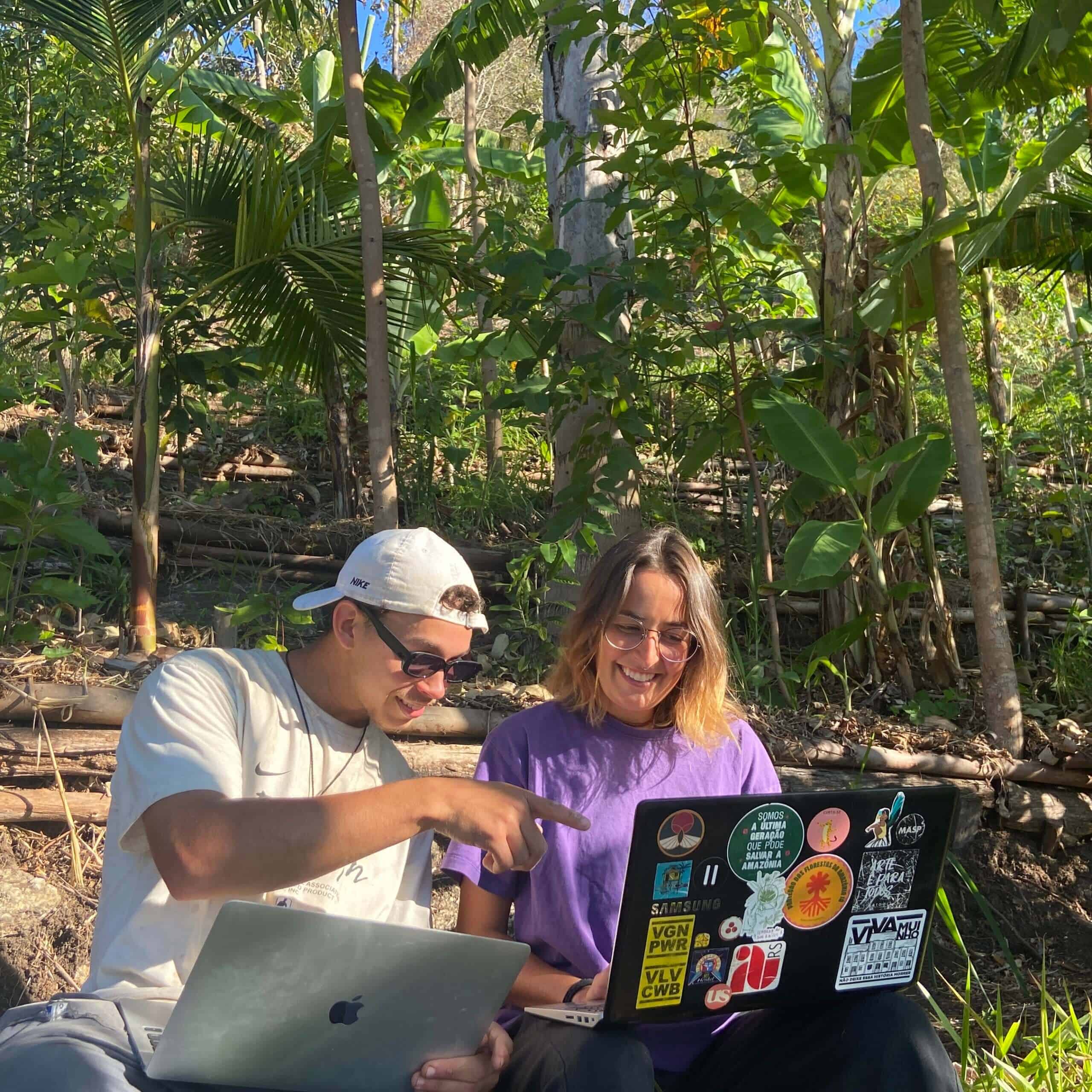
    For centuries, the promise of work and prosperity has drawn people from rural areas to bustling cities, but for many young professionals, the pendulum is swinging in the opposite direction. As a large portion of the job market moves online, many digital nomads are leaving urban life behind in favor of a slower, more sustainable existence in rural settings. Through programs like Nomad Farm, remote workers are exploring rural destinations around the world and learning about self-sufficiency and sustainable living on permaculture farms.

    Sustainability

    sustainability_education_farmPermaculture is a system that combines traditional agricultural practices with scientific knowledge to create sustainable farming systems that mimic natural processes. A key feature of permaculture farming is the pursuit of sustainable living, where we work in harmony with nature. Through permaculture, people grow their own food, reduce waste, build sustainable homes using natural building techniques, manage water systems, and engage in other practices. Digital nomads working on a permaculture farm can gain valuable insights into ecological practices and contribute to a more sustainable way of life.


    Well-being
    eco caminhos agriculture permaculture agroforestry organic bioconstruction

    Another appeal of permaculture is that it allows for a connection with nature. Research indicates that being immersed in nature significantly reduces stress, as farm life encourages habits that benefit physical and mental health in various ways. Engaging in outdoor tasks like hiking, cycling, trekking, and visiting waterfalls promotes a healthier lifestyle. In an era of mass-produced food, fresh farm produce stands out as a way to enhance nutrition and overall well-being. For digital nomads, living on a farm creates a routine conducive to improved mental health and enhanced physical fitness.


    Community

    One of the most rewarding aspects of permaculture farming is the community. Unlike the anonymity often found in cities, these small eco-farms offer a close-knit and welcoming environment. From shared meals and collaborative work on the farm to local festivals and gatherings, there are abundant opportunities to connect and build meaningful relationships. Becoming integrated into this community not only enriches the living experience but also fosters a sense of belonging and support.


    international volunteers brazil eco farm experience

    Intercultural exchange

    Many permaculture farms are open to visitors from various places. Living on a farm offers a unique opportunity to immerse oneself in the host country’s culture and interact with people from around the world. This experience includes engaging in the agricultural, building, and culinary traditions of the region. Living alongside people from other countries allows for the exchange and blending of ideas, arts, music, and meals from diverse cultures. The richness of this environment provides personal and professional growth, enabling digital nomads to gain new perspectives and skills that go beyond their work.


    Experience Nomad Farm Life at Eco Caminhos!

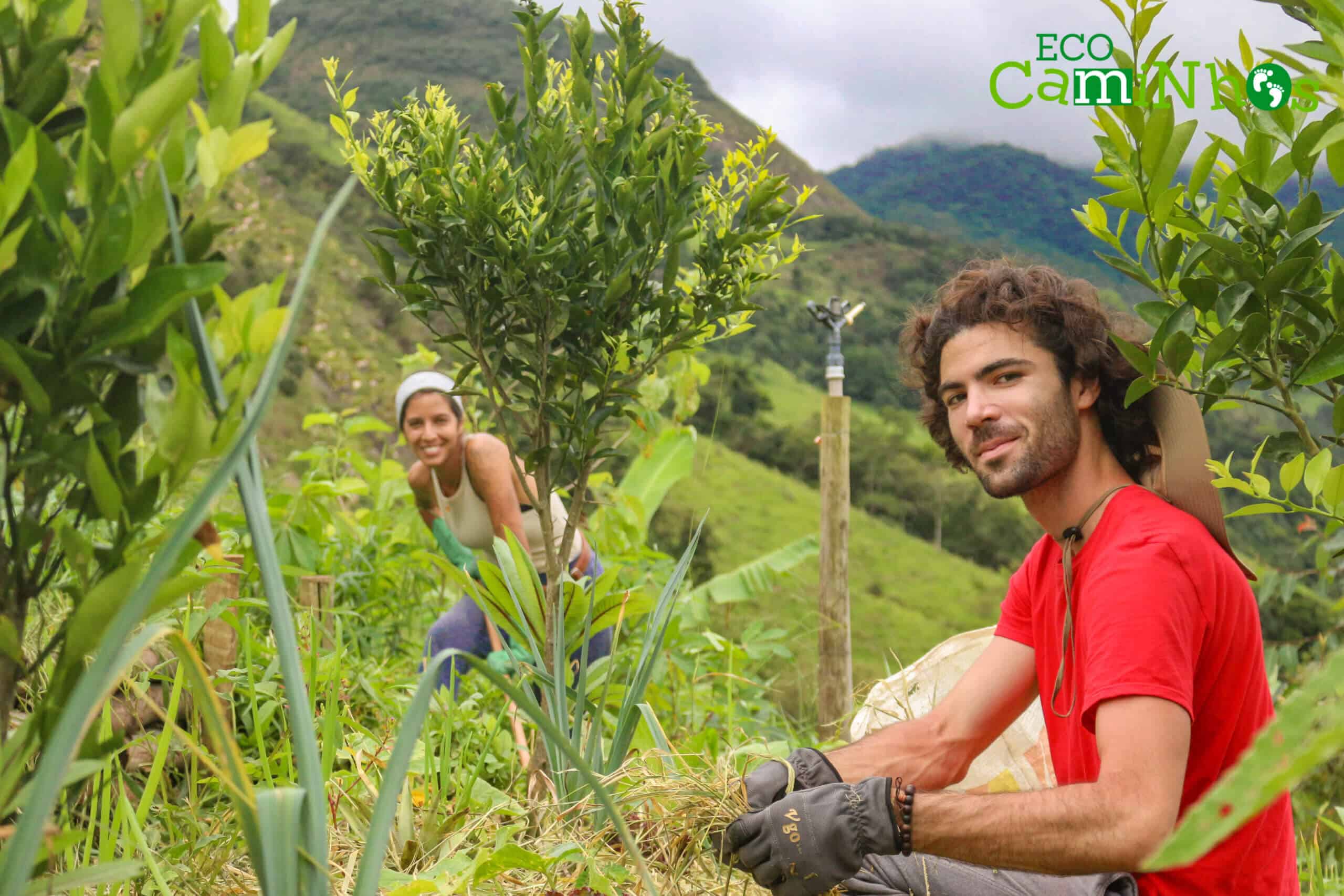
     We are excited to announce a special partnership between Nomad Farm and Eco Caminhos, from November 17 to December 15. This collaboration allows digital nomads to work remotely at Eco Caminhos through our partnership with Nomad Farm. At Eco Caminhos, Nomad Farmers will have the opportunity to work in a picturesque setting, interact with a vibrant international community, and contribute to environmental sustainability through hands-on practices in agroforestry and natural building. For more information about this coworking and coliving experience, visit the Nomad Farm website.

     nomad farm logo

    [/vc_column_text][/vc_column][/vc_row][vc_row][vc_column][gap size=”30px” id=”” class=”” style=””][swmsc_promotion_box title_text_color=”#ffffff” title_text_size=”22″ sub_text=”You can learn more about the details and register through Nomad Farm” sub_text_color=”#ffffff” sub_text_size=”13″ button_text=”Register Now!” target=”_self” button_link=”https://www.nomadfarm.co/eco-caminhos” button_bg=”#90be54″ button_border_color=”#90be54″ button_text_color=”#ffffff” display_style=”default” box_background=”#262626″ border=”true” id=”” class=”” style=””]Interested in joining the retreat?[/swmsc_promotion_box][swmsc_simple_section id=”” class=”” style=””][gap size=”30px” id=”” class=”” style=””][gap size=”30px” id=”” class=”” style=””][swmsc_text_block id=”” class=”” style=””]

    What’s Included in the Retreat?

    [/swmsc_text_block][gap size=”30px” id=”” class=”” style=””][/swmsc_simple_section][/vc_column][/vc_row][vc_row][vc_column width=”2/5″][swmsc_text_block id=”” class=”” style=””]

    Workshops

    [/swmsc_text_block][swmsc_text_block id=”” class=”” style=””]

    ♻️ Permaculture Presentation workshop

    🪵 Bioconstruction Presentation and workshop

    🌱 Future Ecolibrium project Presentation

    🥭 Agroforestry workshop

    🧀 Making cheese workshop

    🧼 Making Soap workshop

    🐄 Milking cows workshop

    👩‍🌾 3 Hands on farm days per week (optional)

    [/swmsc_text_block][/vc_column][vc_column width=”3/5″][swmsc_image_slider animation_type=”fade” auto_play=”true” bullet_navigation=”true” arrow_navigation=”true” slide_interval=”5000″ id=”” class=”” style=””][swmsc_image_slide link=”#” target=”_self” src=”25901″][swmsc_image_slide link=”#” target=”_self” src=”25899″][swmsc_image_slide link=”#” target=”_self” src=”25902″][swmsc_image_slide link=”#” target=”_self” src=”25907″][swmsc_image_slide link=”#” target=”_self” src=”25906″][swmsc_image_slide link=”#” target=”_self” src=”25905″][swmsc_image_slide link=”#” target=”_self” src=”25903″][swmsc_image_slide link=”#” target=”_self” src=”25898″][swmsc_image_slide link=”#” target=”_self” src=”25909″][/swmsc_image_slider][/vc_column][/vc_row][vc_row][vc_column width=”1/2″][gap size=”30px” id=”” class=”” style=””][swmsc_text_block id=”” class=”” style=””]

    Comodidades

    🍳 Breakfast on weekdays*

    🥘 Lunch on weekdays*

    ☕ Daily coffee

    💻 Coworking space & wifi

    🍴 Access to shared kitchen

    🧺 Access to laundry facility

    🫧 Weekly room & house cleaning

    [/swmsc_text_block][swmsc_simple_section id=”” class=”” style=””][/swmsc_simple_section][/vc_column][vc_column width=”1/2″][gap size=”30px” id=”” class=”” style=””][swmsc_text_block id=”” class=”” style=””]

    Recreation

    [/swmsc_text_block][swmsc_text_block id=”” class=”” style=””]

    ⛰️ 4 guided hikes in the mountains

    👙 1 Visit to Waterfall

    💌 Daily community gatherings & activities

    🚴 Access to mountain bikes

    [/swmsc_text_block][/vc_column][/vc_row][vc_row][vc_column][ultimate_video u_video_url=”https://www.youtube.com/watch?v=fc8PxtA8f5s” yt_autoplay=”” yt_sugg_video=”” yt_mute_control=”” yt_modest_branding=”” yt_privacy_mode=”” play_size=”75″ enable_sub_bar=”” css_video_design=”.vc_custom_1725037256169{margin-right: 100px !important;margin-left: 100px !important;}”][/vc_column][/vc_row][vc_row][vc_column][/vc_column][/vc_row][vc_row][vc_column][vc_column_text]

    [/vc_column_text][/vc_column][/vc_row]

  • Taioba: The Green Treasure of Agroforestry

    Taioba: The Green Treasure of Agroforestry

    Taioba, a leafy green native to South America, is a key player here at Eco Caminhos farm due to its health benefits and usefulness within agroforestry. This plant can be found in kitchens across Brazil, Africa, and Trinidad and Tobago. In this article, we will explore the wonders of taioba, from its ecological role to its culinary applications.


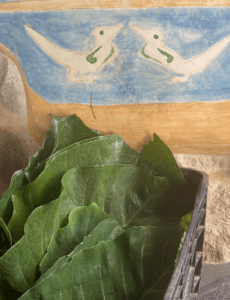
    taioba leaves in a crate with natural cob walls in the backgroung


    Taioba and the Agroforestry System

    Taioba (Xanthosoma sagittifolium) serves various functions within agroforestry systems. Amidst the diversity of plants, taioba not only thrives, but also helps maintain soil moisture and protect against erosion, thanks to its large leaves. Taioba leaves act as a living mulch, helping to keep the soil fluffy and moist. This characteristic is essential for protecting tree roots and providing shade for small coffee seedlings, creating a more favorable environment for their initial development.  Its presence contributes significantly to the health of the ecosystem, promoting biological diversity and agricultural sustainability.

    In the pictures to the right you can see our agroforestry systems (SAF) at different stages. In the newly planted SAF (left), it is easy to see how taioba creates shade for the coffee seedling below. The more mature SAF (right) shows inhame which serves a similar role as the taioba amongst a larger diversity of more mature plants. Be warned that the inhame leaf, while similar in appearance and function within agroforestry to the taioba, is not safe for consumption; however, inhame root is edible and delicious. 

    agroforestry system with inga, banana, taioba, and coffee
    See how taioba interacts with other plants in a five month old agroforestry system
    a mature agroforestry system with eucalyptus, banana, inhame, lemongrass, and coffee. Developed using permaculture systems
    The inhame plays a similar role to taioba here in this mature agroforestry system


    Health Benefits & Preparation

    In addition to its functions within an agroforestry system, taioba is a rich source of essential nutrients. Rich in vitamins A and C, calcium, and iron, taioba offers significant health benefits, including strengthening the immune system, promoting eye health and maintaining healthy bones and teeth. Furthermore, its low calories make it an excellent food to include in balanced diets.

    However, taioba requires proper preparation because it contains oxalic acid. Oxalic acid is also found in foods like spinach and other leafy green vegetables. When consumed in large quantities, oxalic acid can cause irritation to the mucous membranes. Proper preparation of taioba, mainly through cooking, nullifies these adverse effects, making it safe for consumption. Traditionally taioba leaves are consumed cooked in stews, soups, or pies. When cooked, this leafy green has a mild and pleasant flavor.


    Taioba Refogada (Stir-fry) Recipe

    Ingredients:

    • 1 bunch of taioba (1o leaves)
    • 2 cloves of garlic
    • 2 tablespoons of olive oil
    • Salt to taste

    Steps:

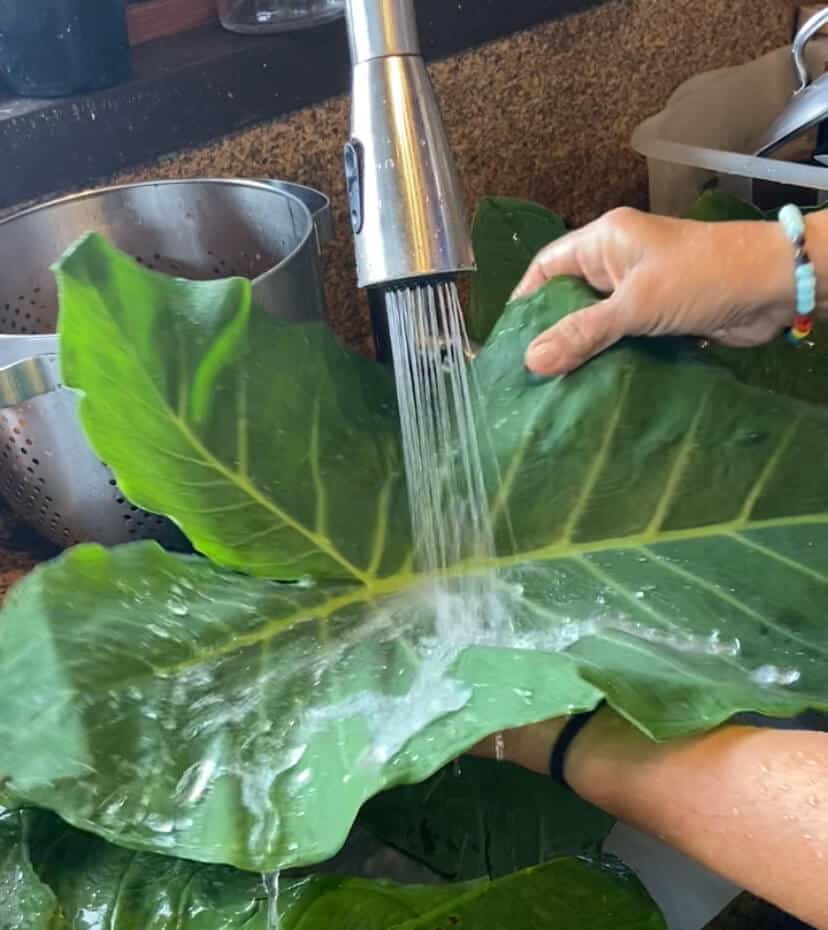
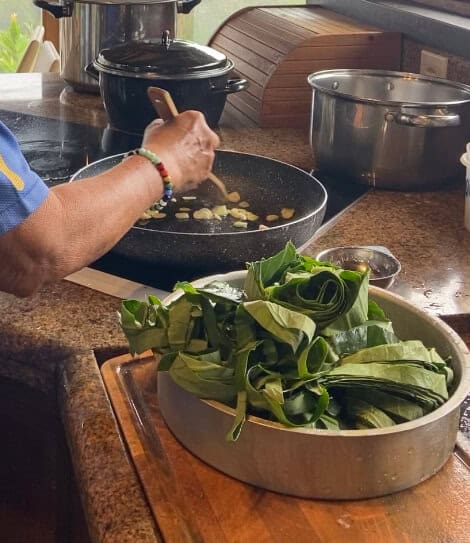
    1. Wash the leaves well under running water to remove any dirt or residue.
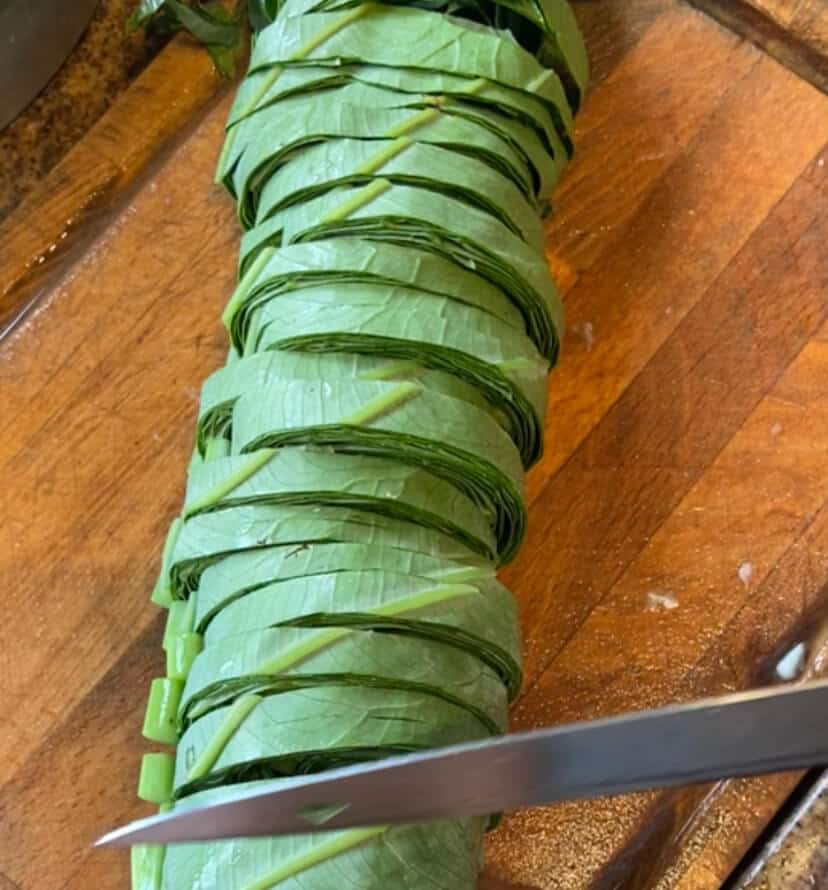
    2. Remove the stalk and cut into strips or pieces.

    3. Saute garlic in olive oil over medium heat until fragrant.
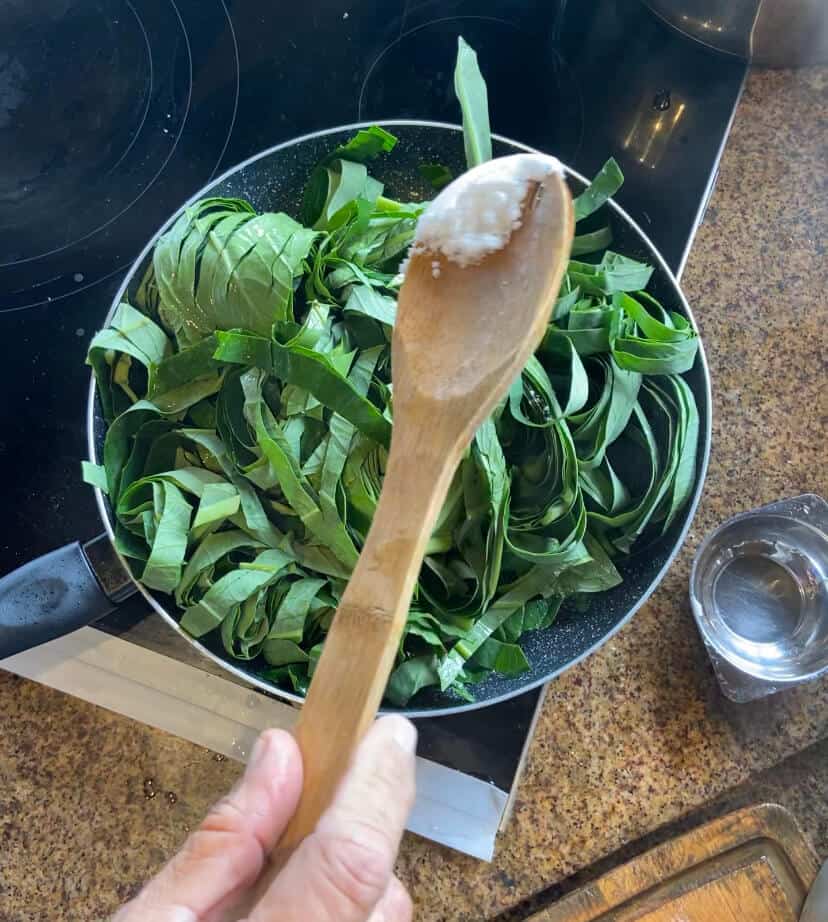
    4. Add in the taioba and salt to taste.
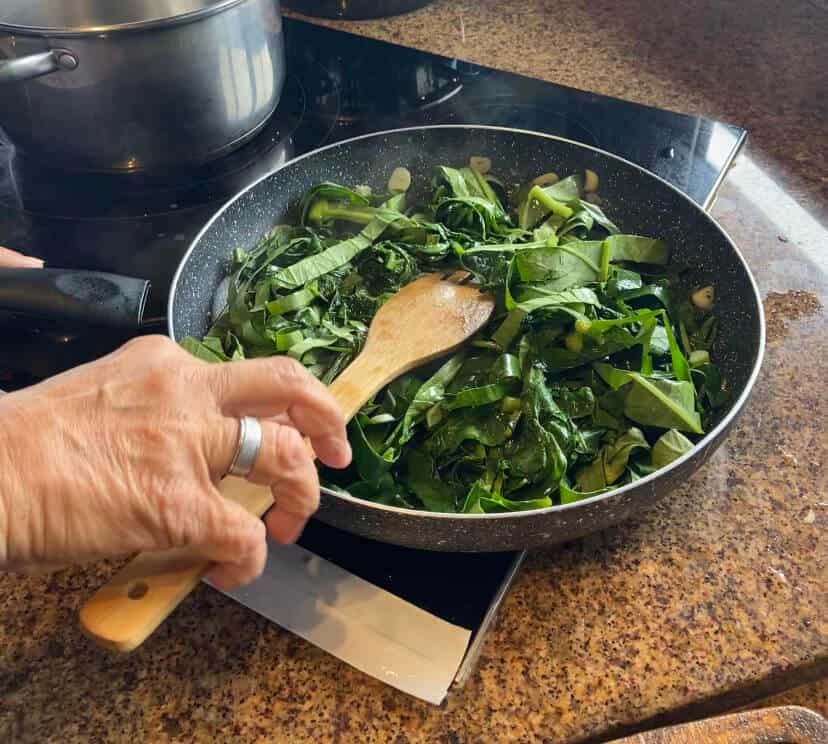
    5. Stir occasionally, until the taioba has reduced to about half of its original volume.
    6. After the taioba has reduced to 50% of its original volume, turn the heat to low.
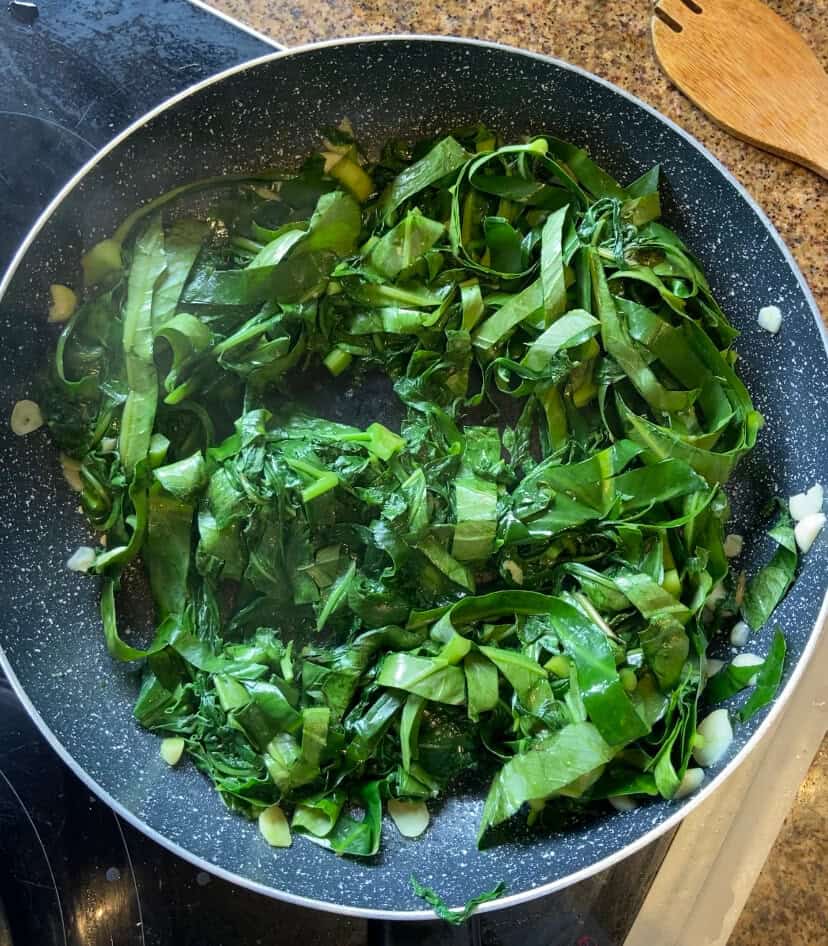
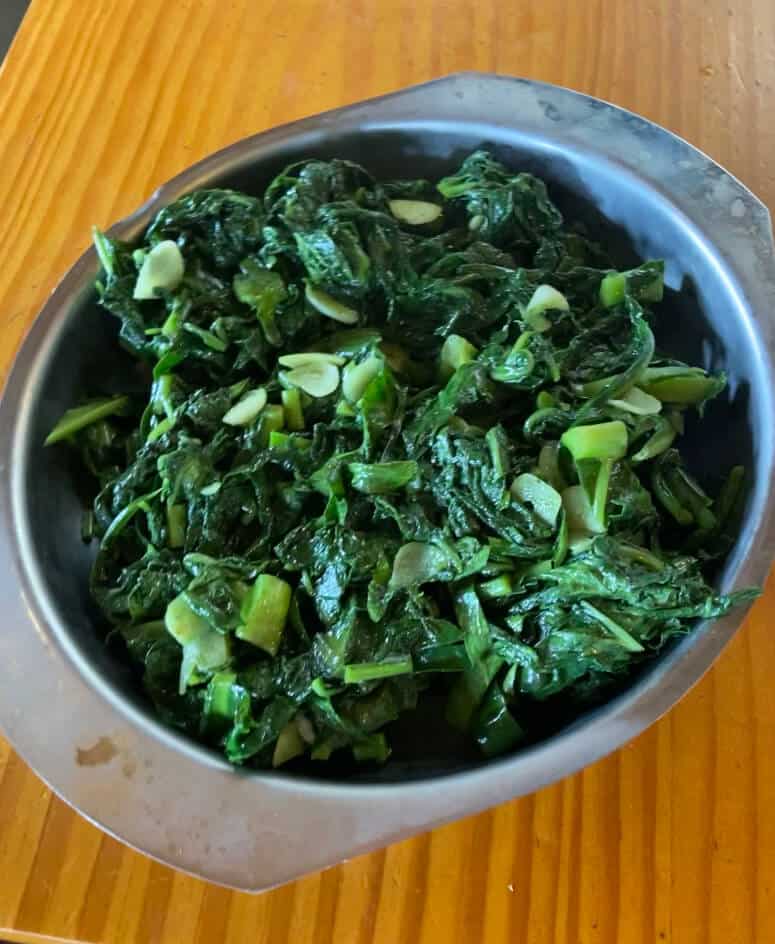
    7.  When the taioba has cooked down to a texture reminiscent of cooked spinach, it’s ready to serve and enjoy!